Hello guys here you find class 12 term 1 and term 2 practical copy in which you will find all the experiment that was done by you in your school so download the attached file from below link
Thursday, April 7, 2022


Sunday, September 8, 2019
Biodegradable plastic
Biodegradable plastic
HLO GUYS I AM AMIT KUMAR SINGH AND IN THIS TOPIC I AM GIVING YOU SOME DETAIL ABOUT BIODEGRADABLE PLASTIC
You all are familiar withPlastic. It is non degradable in water and also it realesed many toxic substances while combustion.
Now a days scientist made the plastic that are fully degrated in water without any release of toxic substances.
WHAT DO YOU MEAN BY BIODEGRADABLE PLASTIC?
 |
| Biodegradable plastic |
Biodegradable plastics are plastics that can be decomposed by the action of living organisms, usually microbes, into water, carbon dioxide, and biomass. Biodegradable plastics are commonly produced with renewable raw materials, micro-organisms, petrochemicals, or combinations of all three.
While the words "bioplastic" and "biodegradable plastic" are similar, they are not synonymous. Not all bioplastics are biodegradable.
By using this plastic we can able to keep our river ponds and other water reservoirs clean and plastic free.
When these plastic comes in contact with water they are fully degrated, but the normal plastic which we are using is not degrated in water and the rivers are polluted and this result death of many aquatic life. So I recommended you to use biodegradable plastic
 |
| Biodegradable plastic |

TYPES
 |
| Scientist develop the plastic |
Bio-based plastics
Biologically synthesized plastics (also called bioplastics or biobased plastics) are plastics produced from natural origins, such as plants, animals, or micro-organisms.[6]
Polyhydroxyalkanoates (PHAs)
Polyhydroxyalkanoates are a class of biodegradable plastic naturally produced by various micro-organisms (example: Cuprividus necator). Specific types of PHAs include poly-3-hydroxybutyrate (PHB), polyhydroxyvalerate (PHV) and polyhydroxyhexanoate (PHH). The biosynthesis of PHA is usually driven by depriving organisms of certain nutrients (e.g. lack of macro elements such as phosphorus, nitrogen, or oxygen) and supplying an excess of carbon sources.[7] PHA granules are then recovered by rupturing the micro-organisms.[8]
PHA can be further classified into two types:
- scl-PHA from hydroxy fatty acids with short chain lengths including three to five carbon atoms are synthesized by numerous bacteria, including Cupriavidus necator and Alcaligenes latus (PHB).
- mcl-PHA from hydroxy fatty acids with medium chain lengths including six to 14 carbon atoms, can be made for example, by Pseudomonas putida.[9]
Polylactic acid (PLA)
*Note: PLAs are often perceived as biodegradable. However, they are non-biodegradable according to American and European standards. Please see controversy section.*
Polylactic acid is thermoplastic aliphatic polyester synthesized from renewable biomass, typically from fermented plant starch such as from corn, cassava, sugarcane or sugar beet pulp. In 2010, PLA had the second highest consumption volume of any bioplastic of the world.[10]
Starch Blends
Starch blends are thermoplastic polymers produced by blending starch with plasticizers. Because starch polymers on their own are brittle at room temperature, plasticizers are added in a process called starch gelatinization to augment its crystallization.[11] While all starches are biodegradable, not all plasticizers are. Thus, the biodegradability of the plasticizer determines the biodegradbility of the starch blend.
Biodegradable starch blends include starch/polylactic acid,[12] starch/polycaprolactone,[13] and starch/polybutylene-adipate-co-terephthalate.
Others blends such as starch/polyolefin are not biodegradable.
Cellulose-based Plastics
Cellulose bioplastics are mainly the cellulose esters, (including cellulose acetate and nitrocellulose) and their derivatives, including celluloid. Cellulose can become thermoplastic when extensively modified. An example of this is cellulose acetate, which is expensive and therefore rarely used for packaging.[14]
Petroleum-based plastics
Petroleum-based plastics are derived from petrochemicals, which are obtained from fossil crude oil, coal or natural gas. The most widely used petroleum-based plastics such as polyethylene terephthalate (PET), polyethylene (PE), polypropylene (PP), and polystyrene (PS) are not biodegradable. However, the following petroleum-based plastics listed are.
Polyglycolic acid (PGA)
Polyglycolic acid is a thermoplastic polymer and an aliphatic polyester. PGA is often used in medical applications such as PGA sutures for its biodegradability. The ester linkage in the backbone of polyglycolic acid gives it hydrolytic instability. Thus polyglycolic acid can degrade into its nontoxic monomer, glycolic acid, through hydrolysis. This process can be expedited with esterases. In the body, glycolic acid can enter the tricarboxylic acid cycle, after which can be excreted as water and carbon dioxide.[15]
Polybutylene succinate (PBS)
Polybutylene succinate is a thermoplastic polymer resin that has properties comparable to propylene. It is used in packaging films for food and cosmetics. In the agricultural field, PBS is used as a biodegradable mulching film[16] PBS can be degraded by Amycolatopsis sp. HT-6 and Penicillium sp. strain 14-3. In addition, Microbispora rosea, Excellospora japonica and E. viridilutea have been shown to consume samples of emulsified PBS.[17]
Polycaprolactone (PCL)
Polycaprolactone has gained prominence as an implantable biomaterial because the hydrolysis of its ester linkages offers its biodegradable properties. It has been shown that firmicutes and proteobacteria can degrade PCL. Penicillium sp. strain 26-1 can degrade high density PCL; though not as quickly as thermotolerant Aspergillus sp. strain ST-01. Species of clostridium can degrade PCL under anaerobic conditions.[17]
Poly(vinyl alcohol) (PVA, PVOH)
Poly(vinyl alcohol) is one of the few biodegradable vinyl polymers that is soluble in water. Due to its solubility in water (an inexpensive and harmless solvent), PVA has a wide range of applications including food packaging, textiles coating, paper coating, and healthcare products.[18]
Polybutylene adipate terephthalate (PBAT)
Polybutylene adipate terephthalate (PBAT) is a biodegradable random copolymer
SO I FULLY RECOMMENDED YOU TO BOYCOTT THE USE OF NORMAL PLASTIC AND TRY TO USE THIS PLASTIC ONLY.
THANK YOU
- AMITS
Saturday, September 7, 2019
Chandrayan 2
Mission chandrayaan 2
HLO GUYS I AM AMIT KUMAR SINGH AND IN THIS TOPIC I AM GIVING BRIEF DETAIL OF MISSION CHANDRAYAAN 2
We all know that this is the first Indian mission in which the Indian lander land on the south portion of the moon
From earth we are not able to see the back portion of the Moon and also the sunlight not reach there. So the scientist believe that in that side the water is present, the rock in this side is hard as well.
Many other space agencies tried to reach to that portion but no one can get success
But India became the first space agency which reach to 2 km above from the the surface of the Moon on 6 September 2019 at around 1:00Am to 2:00AM.
But after reaching that point the scientist of ISRO loose the communication with Vikram lander.
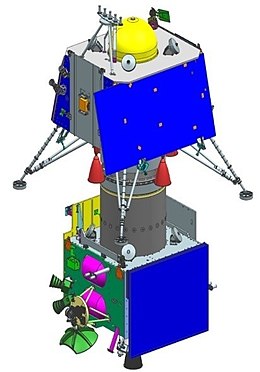 |
| image by amit singh vikram lander |
ABOUT CHANDRAYAAN 2
Chandrayaan 2 is the second lunar exploration mission developed by the Indian Space Research Organisation (ISRO), after Chandrayaan-1.It consists of a lunar orbiter, the Vikram lander, and the Pragyan lunar rover, all of which were developed in India. The main scientific objective is to map the location and abundance of lunar water via Pragyan, and ongoing analysis from the orbiter circling at a lunar polar orbit of 100 × 100 km.
The mission was launched to the Moon from the second launch pad at Satish Dhawan Space Centre on 22 July 2019 at 2.43 PM IST (09:13 UTC) by a Geosynchronous Satellite Launch Vehicle Mark III (GSLV Mk III). The craft reached the Moon's orbit on 20 August 2019 and began orbital positioning maneuvers for the landing. Vikram and the rover was scheduled to land on the near side of the Moon, in the south polar region[27] at a latitude of about 70° south at approximately 1:50 am on 7 September 2019. However, at about 1:52 am IST, the lander deviated from its intended trajectory at around 2.1 kilometer (1.3 mi) from landing and the last location of the spacecraft showed it to be 1km from its landing site travelling vertically at 60m/s and horizontally at 48m/s.
History
On 12 November 2007, representatives of the Russian Federal Space Agency (Roscosmos) and ISRO signed an agreement for the two agencies to work together on the Chandrayaan-2 project. ISRO would have the prime responsibility for the orbiter and rover, while Roscosmos was to provide the lander. The Indian government approved the mission in a meeting of the Union Cabinet, held on 18 September 2008 and chaired by Prime Minister Manmohan Singh. The design of the spacecraft was completed in August 2009, with scientists of both countries conducting a joint review.
Although ISRO finalised the payload for Chandrayaan-2 per schedule, the mission was postponed in January 2013 and rescheduled to 2016 because Russia was unable to develop the lander on time. Roscosmos later withdrew in wake of the failure of the Fobos-Grunt mission to Mars, since the technical aspects connected with the Fobos-Grunt mission were also used in the lunar projects, which needed to be reviewed.[35] When Russia cited its inability to provide the lander even by 2015, India decided to develop the lunar mission independently.
The spacecraft's launch had been scheduled for March 2018, but was first delayed to April and then to October to conduct further tests on the vehicle. On 19 June 2018, after the program's fourth Comprehensive Technical Review meeting, a number of changes in configuration and landing sequence were planned for implementation, pushing the launch to the first half of 2019. Two of the lander's legs got minor damage during one of the tests in February 2019.
Chandrayaan-2 launch was initially scheduled for 14 July 2019, 21:21 UTC (15 July 2019 at 02:51 IST local time), with the landing expected on 6 September 2019. However, the launch was aborted due to a technical glitch and was rescheduled.The launch occurred on 22 July 2019 at 09:13 UTC (14:43 IST) on the first operational flight of a GSLV MK III M1.
Objectives
The primary objectives of Chandrayaan-2 are to demonstrate the ability to soft-land on the lunar surface and operate a robotic rover on the surface. Scientific goals include studies of lunar topography, mineralogy, elemental abundance, the lunar exosphere, and signatures of hydroxyl and water ice. The orbiter will map the lunar surface and help to prepare 3D maps of it. The onboard radar will also map the surface while studying the water ice in the south polar region and thickness of the lunar regolith on the surface.
Design
The mission was launched on a Geosynchronous Satellite Launch Vehicle Mark III (GSLV Mk III) with an approximate lift-off mass of 3,850 kg (8,490 lb) from Satish Dhawan Space Centre on Sriharikota Island. As of June 2019, the mission has an allocated cost of ₹978 crore (approximately US$141 million) which includes ₹603 crore for space segment and ₹375 crore as launch costs on GSLV Mk III. Chandrayaan-2 stack was initially put in an Earth parking orbit of 170 km perigee and 40,400 km apogee by the launch vehicle.
Orbiter

The orbiter will orbit the Moon at an altitude of 100 km (62 mi).The orbiter carries eight scientific instruments; two of them are improved versions of those flown on Chandrayaan-1. The approximate launch mass was 2,379 kg (5,245 lb). The Orbiter High Resolution Camera (OHRC) will conduct high-resolution observations of the landing site prior to separation of the lander from the orbiter. The orbiter's structure was manufactured by Hindustan Aeronautics Limited and delivered to ISRO Satellite Centre on 22 June 2015.[53][54]
- Dimensions: 3.2 × 5.8 × 2.2 m
- Gross lift-off mass: 2,379 kg (5,245 lb)
- Propellant mass: 1,697 kg (3,741 lb)
- Dry mass: 682 kg (1,504 lb)
- Power generation capacity: 1000 W
- Mission duration: 1 year in lunar orbit, which may be extended to 2 years.
Vikram lander


The mission's lander is called Vikram (Sanskrit: विक्रम, lit. 'Valour') named after Vikram Sarabhai (1919–1971), who is widely regarded as the founder of the Indian space programme.
The Vikram lander will detach from the orbiter and descend to a low lunar orbit of 30 km × 100 km (19 mi × 62 mi) using its 800 N (180 lbf) liquid main engines. It will then perform a comprehensive check of all its on-board systems before attempting a soft landing, deploy the rover, and perform scientific activities for approximately 14 days. The approximate combined mass of the lander and rover is 1,471 kg (3,243 lb).
The preliminary configuration study of the lander was completed in 2013 by the Space Applications Centre (SAC) in Ahmedabad.The lander's propulsion system consists of eight 50 N (11 lbf) thrusters for attitude control and five 800 N (180 lbf) liquid main engines derived from ISRO's 440 N (99 lbf) Liquid Apogee Motor. Initially, the lander design employed four main liquid engines, but a centrally mounted engine was added to handle new requirements of having to orbit the Moon before landing. The additional engine is expected to mitigate upward draft of lunar dust during the soft landing. Vikram can safely land on slopes up to 12°.

Some associated technologies include a high resolution camera, Laser Altimeter (LASA), Lander Hazard Detection Avoidance Camera (LHDAC), Lander Position Detection Camera (LPDC), Lander Horizontal Velocity Camera (LHVC), an 800 N throttleable liquid main engine, attitude thrusters, Ka band radio altimeters (KaRA), Laser Inertial Reference & Accelerometer Package (LIRAP), and the software needed to run these components. Engineering models of the lander began undergoing ground and aerial tests in late October 2016, in Challakere in the Chitradurga district of Karnataka. ISRO created roughly 10 craters on the surface to help assess the ability of the lander's sensors to select a landing site.[68]
- Dimensions: 2.54 × 2 × 1.2 m
- Gross lift-off mass: 1,471 kg (3,243 lb)
- Propellant mass: 845 kg (1,863 lb)
- Dry mass: 626 kg (1,380 lb
- Power generation capability: 650 W
- Mission duration: ≤14 days (one lunar day)
Pragyan rover

The mission's rover is called Pragyan (Sanskrit: प्रज्ञान, lit. 'Wisdom) The rover's mass is about 27 kg (60 lb) and will operate on solar power.The rover will move on 6 wheels traversing 500 meters on the lunar surface at the rate of 1 cm per second, performing on-site chemical analysis and sending the data to the lander, which will relay it to the Mission Control on the Earth. For navigation, the rover uses:
- Stereoscopic camera-based 3D vision: two 1 megapixel, monochromatic NAVCAMs in front of the rover will provide the ground control team a 3D view of the surrounding terrain, and help in path-planning by generating a digital elevation model of the terrain.IIT Kanpur contributed to the development of the subsystems for light-based map generation and motion planning for the rover.
- Control and motor dynamics: the rover has a rocker-bogie suspension system and six wheels, each driven by independent brushless DC electric motors. Steering is accomplished by differential speed of the wheels or skid steering.
The expected operating time of Pragyan rover is one lunar day or around 14 Earth days as its electronics are not expected to endure the frigid lunar night. However, its power system has a solar-powered sleep/wake-up cycle implemented, which could result in longer service time than planned.Two aft wheels of the rover have the ISRO logo and the State Emblem of India embossed on them to leave behind patterned tracks on the lunar surface, which is used to measure the exact distance travelled, also called visual odometry.
- Dimensions: 0.9 × 0.75 × 0.85 m
- Power: 50 W
- Travel speed: 1 cm/sec.
- Mission duration: ≤14 days (one lunar day)
Payload

ISRO selected eight scientific instruments for the orbiter, four for the lander, and two for the rover. While it was initially reported that NASA and ESA would participate in the mission by providing some scientific instruments for the orbiter, ISRO in 2010 had clarified that due to weight restrictions it will not be carrying foreign payloads on this mission.However, in an update just a month before launch, an agreement between NASA and ISRO was signed to include a small laser retroreflector from NASA to the lander's payload to measure the distance between the satellites above and the microreflector on the lunar surface.
Orbiter
Payloads on the orbiter are:
- Chandrayaan-2 Large Area Soft X-ray Spectrometer (CLASS) from ISRO Satellite Centre (ISAC), Bangalore
- Solar X-ray monitor (XSM) from Physical Research Laboratory (PRL), Ahmedabad for mapping major elements present on the lunar surface.
- Dual Frequency L and S band Synthetic Aperture Radar (DFSAR) from Space Applications Centre (SAC), Ahmedabad for probing the first few tens of metres of the lunar surface for the presence of different constituents, including water ice. SAR is expected to provide further evidence confirming the presence of water ice below the shadowed regions of the Moon.
- Imaging IR Spectrometer (IIRS) from Space Applications Centre (SAC), Ahmedabad for mapping of lunar surface over a wide wavelength range for the study of minerals, water molecules and hydroxyl present.
- Chandrayaan-2 Atmospheric Compositional Explorer 2 (ChACE-2) Quadrupole Mass Analyzer from Space Physics Laboratory (SPL), Thiruvananthapuram to carry out a detailed study of the lunar exosphere.
- Terrain Mapping Camera-2 (TMC-2) from Space Applications Centre (SAC), Ahmedabad for preparing a three-dimensional map essential for studying the lunar mineralogy and geology.
- Radio Anatomy of Moon Bound Hypersensitive Ionosphere and Atmosphere – Dual Frequency Radio Science experiment (RAMBHA-DFRS) by SPL
- Orbiter High Resolution Camera (OHRC) by SAC for scouting a hazard-free spot for landing. Imagery from OHRC will help prepare digital elevation models of the lunar surface.
Vikram lander
The payloads on the Vikram lander are:
- Instrument for Lunar Seismic Activity (ILSA) Seismometer by LEOS for studying Moon-quakes near the landing site
- Chandra's Surface Thermo-physical Experiment (ChaSTE) Thermal probe for estimating the thermal properties of the lunar surface
- RAMBHA-LP Langmuir probe for measuring the density and variation of lunar surface plasma
- A laser retroreflector array (LRA) by NASA Goddard Space Flight Center for taking precise measurements of distance between the reflector on the lunar surface and satellites in lunar orbit. The micro-reflector weighs about 22 grams and can not be used for taking observations from Earth-based lunar laser stations.
Pragyan rover
Pragyan rover carries two instruments to determine the abundance of elements near the landing site:
- Laser induced Breakdown Spectroscope (LIBS) from Laboratory for Electro Optic Systems (LEOS), Bangalore.
- Alpha Particle Induced X-ray Spectroscope (APXS) from PRL, Ahmedabad.


Mission profile


_around_Moon.gif)

Subscribe to:
Comments (Atom)
-
ABOUT AMAZON ECHO PRODUCT DETAIL HLO GUYS, I AM AMIT KUMAR SINGH AND TODAY I AM GOING TO GIVE YOU DESCRIPTION ABOUT AMAZON ECHO. SO PL...
-
Hello guys here you find class 12 term 1 and term 2 practical copy in which you will find all the experiment that was done by you in your...
-
Mission chandrayaan 2 HLO GUYS I AM AMIT KUMAR SINGH AND IN THIS TOPIC I AM GIVING BRIEF DETAIL OF MISSION CHANDRAYAAN 2 We all know t...

